
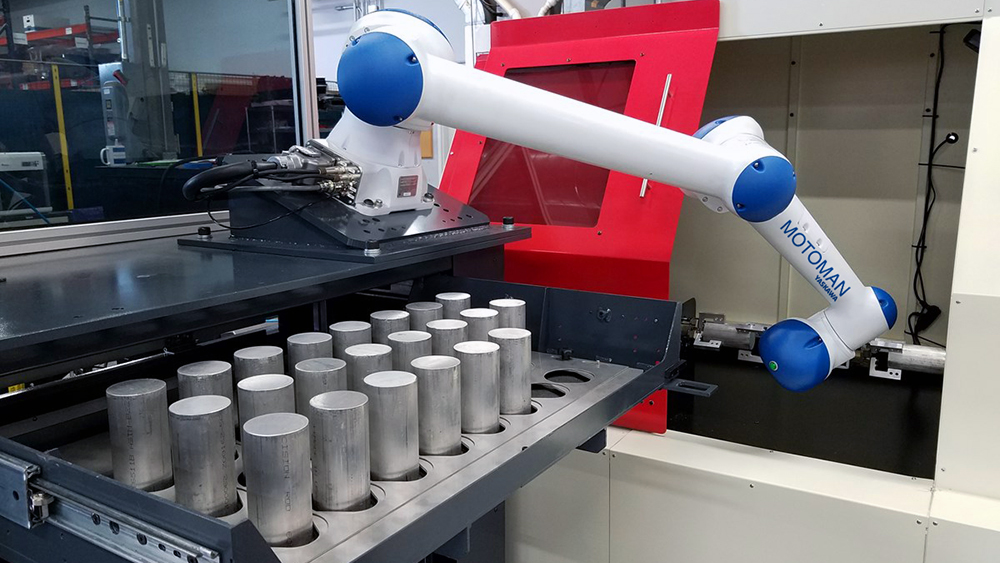
CNC Machine Tending: How robots and AMRs reduce labour pressure and keep machines running.
CNC machines across Australia are sitting idle because the skilled technicians needed to run them simply aren’t available. By combining robotic machine tending with Autonomous Mobile Robots (AMRs), manufacturers can stabilise production, increase utilisation, and operate confidently despite chronic workforce shortages.
Australian manufacturers are facing sustained shortages in the skilled roles required to keep Computer Numeric Control (CNC) machines operating: technicians, trades workers, and machinery operators.
According to the Australian Government’s 2025 Occupation Shortage List (OSL), Technicians and Trades Workers represent 51% of all persistent shortages from 2021–2025, making them the single largest long-term skills deficit in the country.
Furthermore, almost 1 in 2 Technician and Trades occupations are currently in shortage, and shortages for Machinery Operators and Drivers have increased to 28% in 2025 2.
This mirrors what manufacturers experience: CNC machines often sit idle due to staffing, not demand.
“Most factories we assess are operating with fewer qualified technicians than they need. It’s the single biggest bottleneck limiting CNC utilisation,” says a senior system specialist at Robotic Automation™. “Across the industry, we consistently see a large utilisation gap. Many sites run far below their potential and closing that gap is now essential for competitiveness.”
Why CNC utilisation is stuck below its potential
The OSL shows the shortage is structural, not temporary. Skill level 3 occupations – which include CNC machinists, mechanical fitters, automation technicians, and robotics electricians – have a 43% shortage rate.
This results in:
- Delayed part loading
- Extended lead times
- Missed machining cycles
- Bottlenecks between machines
- Reliance on overworked technical staff
- Limited availability for night or weekend shifts
“CNC assets are expensive, and many sit idle for hours every day simply because trained people aren’t available,” the system specialist explains. “Automation isn’t about replacing staff – it’s about keeping machines productive despite shortages.”
How robotic CNC tending works
Robotic CNC tending automates the repetitive interaction between operators and machines:
- Triggering cycle starts
- Opening/closing doors
- Loading raw billets or blanks
- Unloading finished components
- Correct part orientation and detection
- Managing multiple CNCs from one robot cell
When paired with AMRs the workflow becomes continuous:
- AMRs deliver raw metal to the robot cell
- Robots handle loading/unloading and part checks
- AMRs transport finished parts to inspection, washing or packing
- Product continues without human intervention
“Robots bring consistency to the CNC cell, and AMRs remove the material-handling gaps. The two combined make throughput predictable,” says the senior specialist.
Automation directly improves CNC utilisation
Real-world results from automated CNC environments consistently show substantial gains:
- CNC utilisation increases significantly when loading, unloading, and part handling are automated
- Daily output rises, often by hundreds of extra parts, depending on cycle times and shift structure
- Annual throughput expands dramatically, as automation removes idle time and enables longer unattended operation
These improvements come from automating the key bottlenecks – loading, unloading, part verification, and material movement – the same functions performed by CNC tending robots and AMRs in modern facilities.
“These aren’t hypothetical benefits – this is what we see in well-engineered automated CNC cells,” the senior specialist notes.
Labour efficiency: Run more machines with the same team
Because Technicians and Trades workers represent over half of all long-term shortages, and Machinery Operators and Drivers remain increasingly difficult to hire (28% in shortage) manufacturers must improve output without expanding labour.
Robotic CNC tending enables:
- One operator to supervise two or three CNC machines
- Stable throughput across all shifts
- Removal of manual material handling (via AMRs)
- Focused use of skilled technicians for setups, tooling, and quality control.
Lights-out capacity and extended unmanned hours
Labour shortages are most severe in the after-hours night-shift workforce. The OSL shows that occupations experiencing severe undersupply and high demand have vacancy fill rates as low as 28.2%, making nightshift staffing unrealistic.
Robotic CNC tending + AMRs enable:
- Weekend unattended runs
- Overnight “lights-out” machining
- Automated finished-part removal
- Automated raw-part replenishment
- Alarms and exception handling without required onsite staff
“Lights-out manufacturing isn’t futuristic – it’s the direction CNC shops are moving right now. The labour simply isn’t there, and automation is becoming the only reliable way to keep production running,” says the senior specialist.
What a CNC + AMR automation project should include
A complete CNC automation solution typically features:
- CNC tending robot
- AMRs for part transport
- Safety guarding and interlocks
- Local engineering and service support
- Vision systems for part presence/orientation
- End-of-Arm Tooling (EOAT) built for machine environments
- CNC interface integration such as Ethernet/Industrial Protocol, Process Field Network, or Open Platform Communications Unified Architecture
What manufacturers can expect to gain
Based on national labour-market shortages, utilisation benchmarks, and real case studies, automation can help manufacturers:
- Achieve predictable, stable throughput
- Increase production capacity without hiring
- Maintain output despite technician shortages
- Reduce machine idle time caused by staff shortages
- Move closer toward higher and more consistent utilisation
- Extend operational hours without additional staffing shifts
“Automation is how manufacturers stabilise their production in a workforce-constrained environment,” the senior specialist explains. “Robots and AMRs close the utilisation gap when people simply can’t be found.”
Conclusion: Automation has become a workforce strategy
The data makes it clear:
- Technicians and trades workers: 51% of all long-term shortages
- Skill level 3 shortages (CNC, robotics, electrical trades): 43%
- Machinery operators and drivers’ shortages easing to 28%
With shortages persisting for five consecutive years, the labour market will not resolve the gap any time soon.
For CNC manufacturers, robotic tending and AMRs are no longer just productivity upgrades – they are the only scalable way to ensure machines stay running and revenue stays stable.
Ready to move forward?
Schedule a plant walkthrough, and our team will assess your CNC machines, part flow, and labour constraints, then provide a clear, itemised pathway to a robotic machine tending solution that fits your operation.