Humanoid Robots in Manufacturing: Beyond the Hype
Humanoid robots are capturing attention, but what do they really mean for Australian manufacturing?
Every few weeks, another humanoid robot video goes viral. One robot performs martial arts, another dances, while another is shown moving boxes through a warehouse. Combined with rapid advances in artificial intelligence (AI), it’s easy to see why many people believe humanoid robots will soon transform manufacturing and logistics operations.
At Robotic Automation™, we’re watching these developments closely. As a leading Australian robotics and automation integrator, we continually assess emerging technologies and evaluate where they can deliver practical value for manufacturers, warehouses and distribution centres. The question isn’t whether humanoid robots have potential. The question is when they’ll become commercially viable, reliable and productive enough to justify widespread adoption.
Humanoid Robots Are Moving Beyond Demonstrations
For many years, humanoid robots were largely confined to research laboratories and technology demonstrations. Today, that is beginning to change.
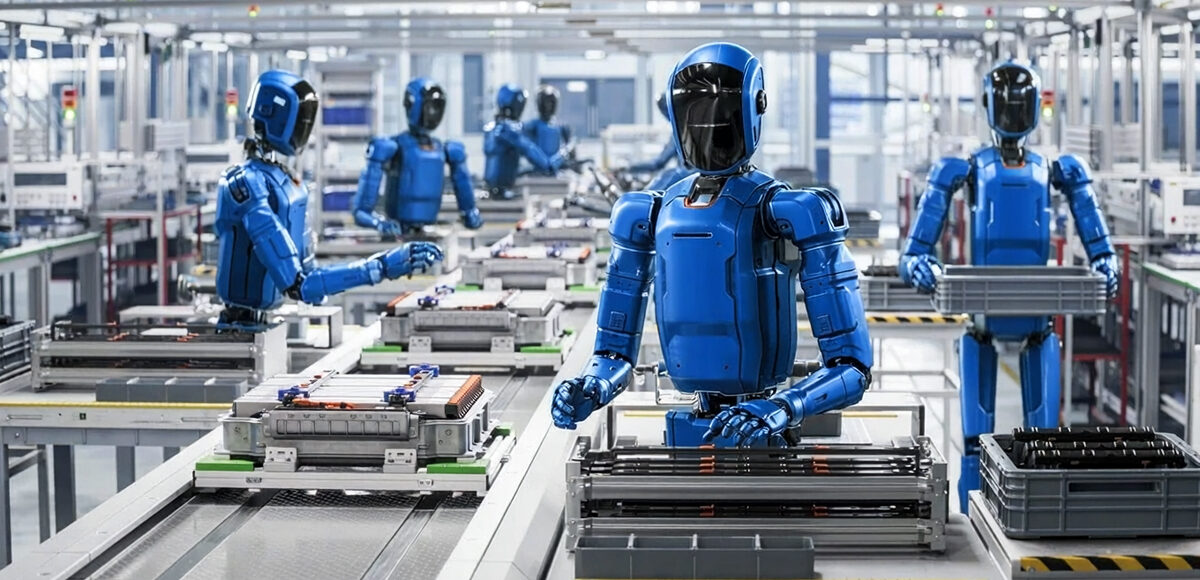
Leading developers including Agility Robotics, Figure AI and Apptronik are testing humanoid robots in real industrial environments. Applications currently being explored include:
- Warehouse material handling
- Transport of containers and totes
- Internal logistics
- Parts delivery
- Manufacturing support activities
- Repetitive manual handling tasks
These trials demonstrate that humanoid robots are capable of performing useful work in industrial settings. However, they also highlight an important reality. Most deployments today remain focused on specific repetitive tasks rather than serving as fully autonomous, general-purpose workers.
Why Manufacturers Are Paying Attention
Factories and warehouses were designed around people. Doors, shelving, walkways, workstations and equipment all assume human operators. Traditional automation often requires processes or facilities to be redesigned around the technology. Humanoid robots offer a different possibility.
In theory, they could operate within existing environments designed for people, potentially reducing the need for major facility modifications. This flexibility is one of the reasons interest in humanoid robotics continues to grow across manufacturing, warehousing and logistics sectors. For manufacturers facing labour shortages, skills gaps and increasing productivity pressures, the potential applications are compelling.
The Biggest Challenge: Reliability and ROI
While the technology is advancing rapidly, manufacturing environments demand more than impressive demonstrations.
Industrial automation must deliver:
- Reliable operation
- Predictable performance
- Workplace safety
- Minimal downtime
- Strong return on investment
A robot that performs well during a demonstration still needs to prove it can operate consistently across thousands of production hours. This remains one of the biggest challenges facing humanoid robotics. For many applications today, conventional industrial robots and mobile robots continue to offer stronger business cases and more proven performance.
AI Is Accelerating Development
Much of the recent progress in humanoid robotics has been driven by advances in artificial intelligence. Modern systems can recognise objects, navigate environments and adapt their actions without requiring every movement to be programmed in advance. These developments are helping close the gap between what robots can do in controlled environments and what they can achieve in real-world industrial applications. As AI technology continues to evolve, the capabilities of humanoid robots are expected to improve significantly.
Preparing for the Future of Manufacturing
At Robotic Automation™, we believe humanoid robots will eventually become part of the broader industrial automation landscape. However, like any new technology, success will ultimately be determined by practical outcomes rather than headlines. As part of our commitment to helping Australian manufacturers remain competitive, we are actively monitoring humanoid robot development and evaluating how these systems may integrate into future manufacturing and logistics operations. When humanoid robots become fit for purpose, economically viable and capable of delivering measurable business outcomes, we intend to be ready to support their deployment.
The Future Is Coming, But It Isn’t Here Yet
Humanoid robots are no longer science fiction. Real-world trials are underway, AI capabilities are advancing rapidly, and investment in the sector continues to accelerate. Yet widespread adoption will depend on the same factors that determine the success of every automation project: productivity, reliability, safety and return on investment. For Australian manufacturers, the opportunity is not to follow the hype. It’s to understand where the technology is heading, evaluate its potential objectively, and adopt it when the business case makes sense. And that’s exactly what we’re doing.