
Warehouse Automation: Before You Add Another Forklift
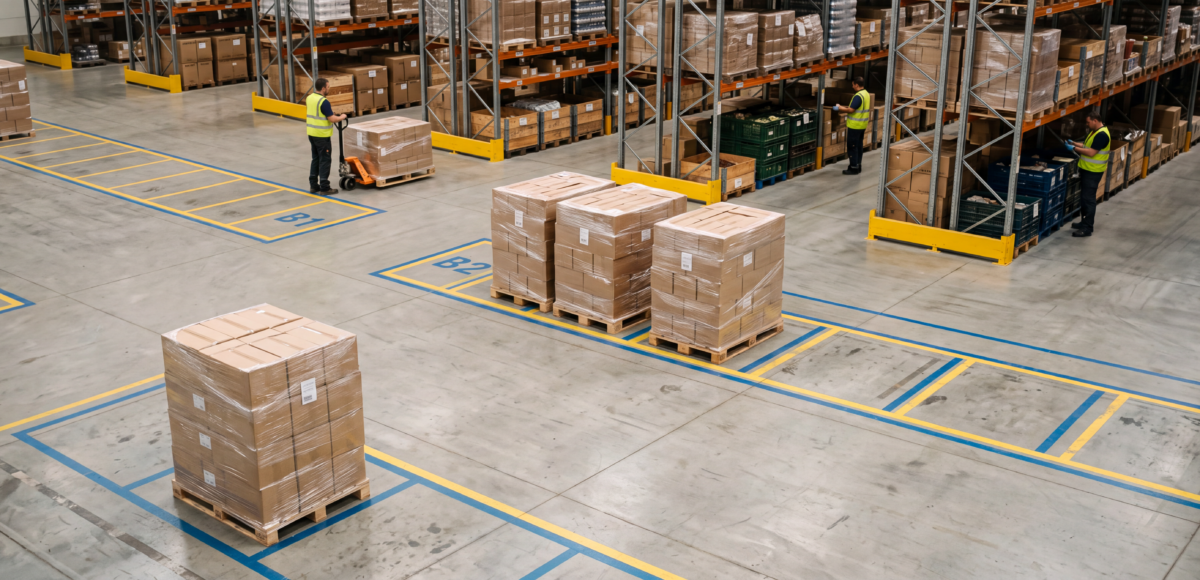
Picture a warehouse midway through the morning shift. Pallets are backing up beside production, and the immediate suggestion is another forklift. But watching the queue raises a useful question: are the pallets waiting for a vehicle, or is the vehicle waiting for somewhere to put them?
The answer changes the investment decision. Additional transport capacity may help. The delay could also involve unavailable storage locations or a handover that depends on someone finding the right information.
Warehouse automation should begin by identifying what limits completed output. Understanding where goods wait, and why, gives your team a specific problem to solve and a clearer basis for deciding which investment will make a difference.
What can warehouse automation improve?
Warehouse automation uses equipment and software to perform or coordinate tasks such as moving goods, storing pallets and preparing orders. It can address a defined handling task or connect several stages within an operation.
The right application depends on the constraint. Mobile robots may help where pallets regularly wait for transport. Automated storage and retrieval may suit an operation struggling with access to stock. Robotic palletising may address a handling stage that cannot keep pace with production.
Each option needs to work with the processes around it. Faster pallet movement delivers value when the receiving area can accept the additional flow.
Find out why work is waiting
Follow a representative load from production or receiving through to dispatch. Observe a normal shift and a peak period, recording where it stops and what must happen before it moves again.
Separate travel time from waiting time. A short transfer may be followed by a much longer delay while someone confirms a storage location. That distinction changes the task an automation system needs to address.
Use these symptoms to guide the investigation.
| What you see | What to investigate | What this helps establish |
| Finished pallets queue beside production | Are they waiting for transport, available storage or confirmation that the destination is ready? | Whether automating transport would remove the delay |
| Stock retrieval holds up orders | Is time lost locating stock, accessing it or moving it? | Whether the priority is stock information, storage design or handling |
| Packing cannot keep pace | Does the delay occur during handling, product changes or replenishment? | Which part of the packing cycle needs attention |
| Orders miss dispatch cut-offs | Where does work accumulate before loading, and when does the queue begin? | Which improvement could help orders reach dispatch sooner? |
Speak with operators about what you observe. They can explain recurring exceptions and workarounds that average cycle times may conceal.
Match the solution to the cause
For the warehouse considering another forklift, the first step is to trace the delay at the pallet collection point.
If storage destinations are ready and pallets consistently wait for a vehicle occupied elsewhere, automated transport may be worth assessing. The brief would need to establish load requirements, pickup frequency and the route’s capacity during busy periods.
If vehicles are available but storage locations have not been assigned, the assessment needs to examine how stock information releases each movement. That handover must work before additional transport capacity can deliver its intended benefit.
Robotic Automation’s warehouse automation solutions include mobile robots, palletising and automated storage and retrieval, with integration into warehouse management software. A clear understanding of the constraint helps determine which applications warrant closer investigation.
Where internal transport is the priority, the AMR vs AGV guide explores the vehicle selection considerations.
Make the handovers part of the project
An automated movement needs clear instructions about the load and its destination. Inaccurate stock locations or inconsistent identification need attention during project planning.
Establish how each task begins and how completion is confirmed. Check what happens when the destination is occupied or a label cannot be read. Define who responds to an exception and how normal operation resumes.
Robotic Automation’s warehouse storage and retrieval case study demonstrates how these elements connect. The installation combined automated guided vehicles with an automated storage and retrieval shuttle system and warehouse management software. Incoming pallets were scanned and assigned storage locations, with stock later retrieved and delivered to an outfeed area.
For a business assessing a similar investment, the relevant lesson is the connection between physical handling and stock information. Both must support the movement required at each stage.
Define a first stage with a measurable result
A first project needs a clear boundary. Moving completed pallets from a production area into storage, for example, gives the assessment a defined starting point and destination.
Record current performance and the required outcome. If production stops because completed pallets cannot be removed, measure that waiting time. If dispatch is the concern, track whether complete orders are ready before the relevant cut-off.
Equipment activity alone provides an incomplete measure of success. Additional pallet movements matter when they help the operation complete the required work.
Include peak demand in the assessment. Average volumes can conceal concentrated periods when queues develop. Ask how the proposed system would handle those conditions and whether the next process could accept the increased flow.
A staged approach should also account for later expansion. Establish which interfaces and layout decisions need to accommodate the next stage before committing to the first.
Prepare a useful brief for your automation partner
You do not need a finished system specification to begin the conversation. Bring enough information to explain the problem and its operational consequences:
- The outcome required: Identify the delay affecting production or customer service and what needs to improve.
- Current and peak demand: Show how volumes change across the shift and when queues develop.
- Load details and site layout: Provide dimensions, weights and the routes goods currently follow.
- Existing systems and recurring exceptions: Explain how movements are controlled and where staff regularly intervene.
This gives an integrator a starting point for assessing feasibility. It also helps your team compare proposals against the same operational need.
Include practical installation constraints, such as available shutdown windows and areas that must remain operational. These influence how a project can be introduced.
Plan for performance after commissioning
Include operator training in the project scope. Staff need to understand normal operation, recognise exceptions and know when to call for technical support.
Plan servicing around the operating schedule, with maintenance handled by qualified technicians. Robotic Automation’s preventative maintenance contracts provide a way to include ongoing equipment care in that plan.
Agree on support arrangements before commissioning. Their scope and cost belong in the investment decision, alongside the equipment and integration work.
Warehouse automation FAQs
Where should I start with warehouse automation?
Identify the process limiting completed output. Measure where goods wait and establish the cause before assessing equipment options.
Can an existing warehouse be automated in stages?
A staged approach may be possible where the layout and system interfaces support it. Each stage needs a workable connection to the remaining operation and a commissioning plan.
Will adding more robots increase warehouse throughput?
It may help when robot capacity is the constraint. If goods are waiting for storage space or downstream processing, additional robots may leave the main delay unresolved.
How should I measure the benefit?
Measure the outcome the project is intended to improve, such as reduced production waiting time or more orders ready before dispatch cut-off. Compare performance under similar operating conditions.
Give the equipment decision a clearer starting point
Back beside the production line, the queue of pallets is still the issue to solve. The suggestion of another forklift gives the team a place to start. Following those pallets through the operation will show whether the investment needs to address transport capacity or the process that allows them to move.
That is a useful starting point for a conversation with Robotic Automation: where the queue forms, what it holds up and what needs to happen next. With that evidence, the team can assess a solution against the result the warehouse needs.